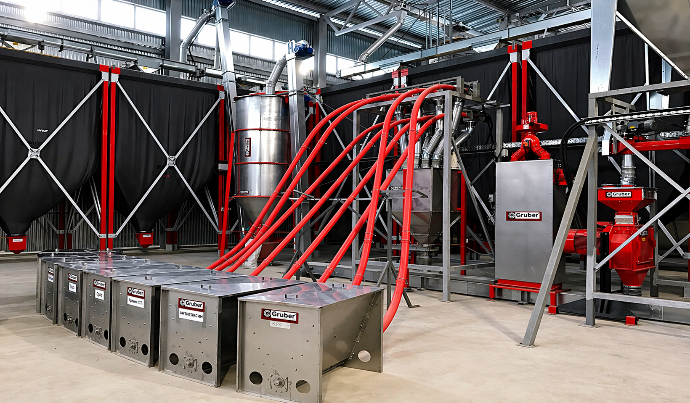
In-House Feed Production — Cost Control and Predictable Profitability
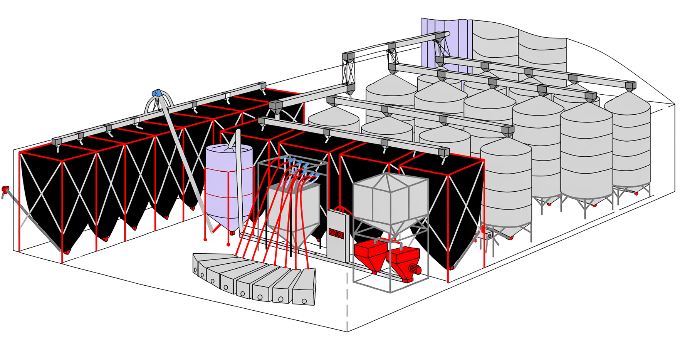
Feed mills by Gruber Maschinen GmbH (Austria) are integrated full-cycle solutions that enable farms to produce compound feed independently, with complete technological control over quality, formulation, and production costs.
All processes—from grain intake, cleaning, and grinding to precise dosing and mixing—operate as a single automated system with minimized human factor.
Thanks to high mixing accuracy (up to 1:100,000), reduced raw material losses, and full production automation, farms achieve feed cost reduction of up to 20–25%, consistent quality of every batch, and controlled, stable nutrition in livestock production.
Your Problems — Our Solutions
Solutions tailored to your production scale
Feed Mill 1.5 t/h
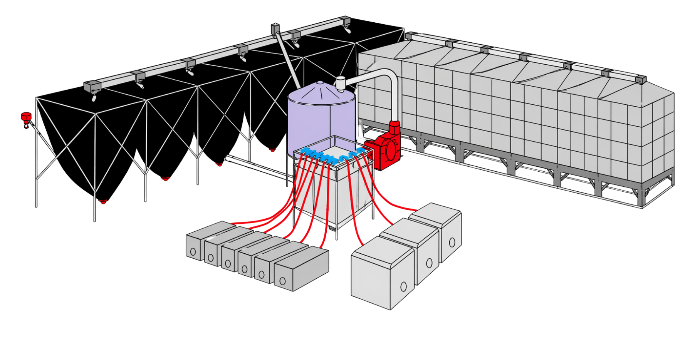
Feed Mill 2.5 t/h
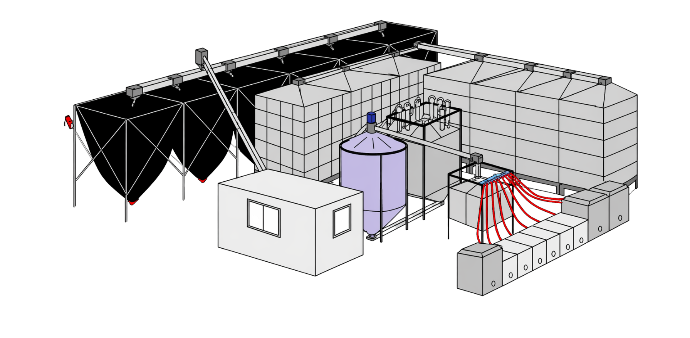
Feed Mill 3.5 t/h
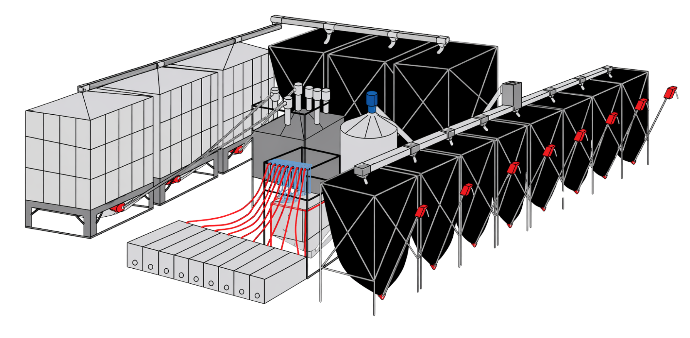
Feed Mill 5 t/h
Turnkey Project Implementation Format
Engineering
Supply
Installation

Commissioning and Handover
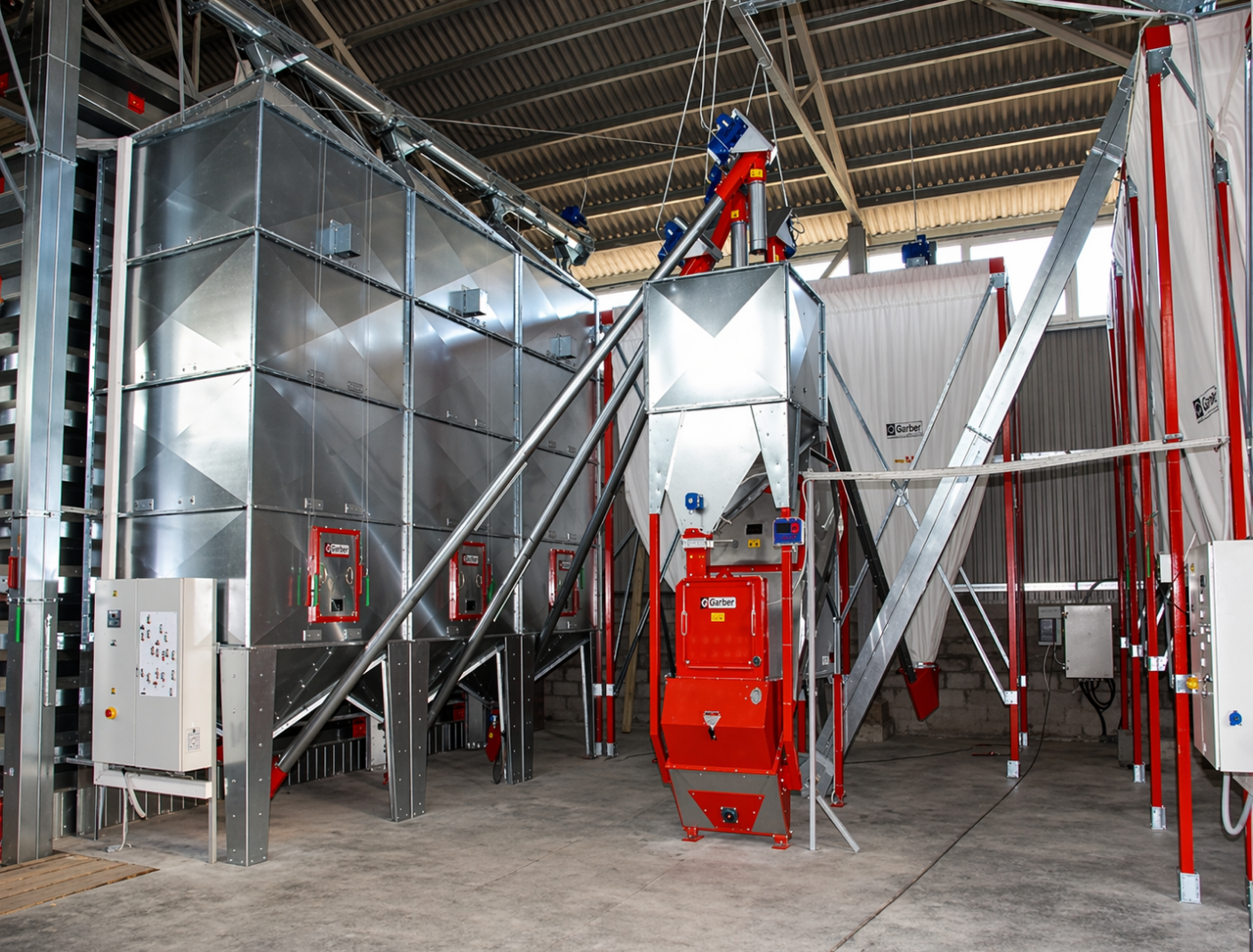
Technological Solutions and Implemented Projects by Gruber
Gruber feed mills are not standalone pieces of equipment, but integrated engineering systems that are already in operation at farms and agro-industrial enterprises of various scales.
Each project combines properly selected equipment, optimized production technology, automation, and a measurable economic outcome for the farm.
We present not just individual components, but complete production complexes that have been successfully implemented in practice.
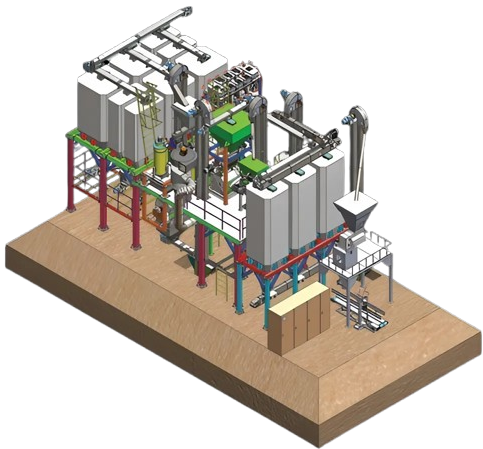
Additional Technological Solutions for Feed Processing and Handling
To expand the capabilities of feed production, we offer dedicated технологічні modules from Özbaşak Değirmen, a manufacturer of grain and feed processing equipment.
These modules can be integrated into an existing feed mill or used as standalone технологічні sections:
Grinding and dosing
Feed pelleting
Flaking production
Packaging of finished products
Such solutions enhance production functionality, enable automation of specific processes, and allow the system to be tailored to the specific needs of the farm.
FAQ — Questions Clients Frequently Ask
Yes. In-house production allows you to reduce feed costs by 20–25% through the use of your own raw materials, elimination of supplier margins, and optimization of logistics.
In addition, you reduce losses that impact farm profitability each year.
The payback period depends on production volumes and feed formulation, but in most cases it is 1–3 years, driven by:
- savings on feed production costs
- reduced storage losses
- increased livestock productivity
For example, feed losses during storage can reach up to UAH 2,750,000 per year for a farm with 1,000 head.
A stable ration ensured by an automated system helps increase productivity:
up to +1 liter of milk per cow per day
ЦThis can generate up to UAH 3,280,000 in additional annual revenue (for 1,000 head).
The selection depends on livestock size, feed formulation, and consumption volumes.
Indicatively:
- up to 800 head — 1.5–2 t/h
- 800–1500 head — 2.5 t/h
- 1500–2500 head — 3.5 t/h
- 2500+ head — 5 t/h and above
We configure each solution individually for your farm.
Gruber mixers ensure homogeneity of up to 1:100,000.
This means uniform distribution even of micro-additives (e.g., 10 g per 1 t), ensuring a stable ration.
An in-house feed mill provides full technological control:
- precise dosing of components
- automated process control
- minimized human factor
You control feed composition and can quickly adjust formulations.
The systems use aspiration-based cleaning, which:
- removes dust and light impurities
- improves raw material hygiene
- reduces contamination risks
This helps minimize losses and risks in livestock production.
Thanks to automation based on Siemens PLC (SPS):
the plant can be operated by as few as 1 operator (depending on the level of automation)
Yes. Solutions are designed individually:
- according to building dimensions
- based on existing infrastructure
- aligned with budget and operational needs
This allows optimization of investment costs.
Systems are designed with reliability in mind:
- redundant units (2 hammer mills)
- proven European components
- protection and alarm systems
This minimizes the risk of production downtime.
Other products
Contact Our Specialist
Elevator Systems
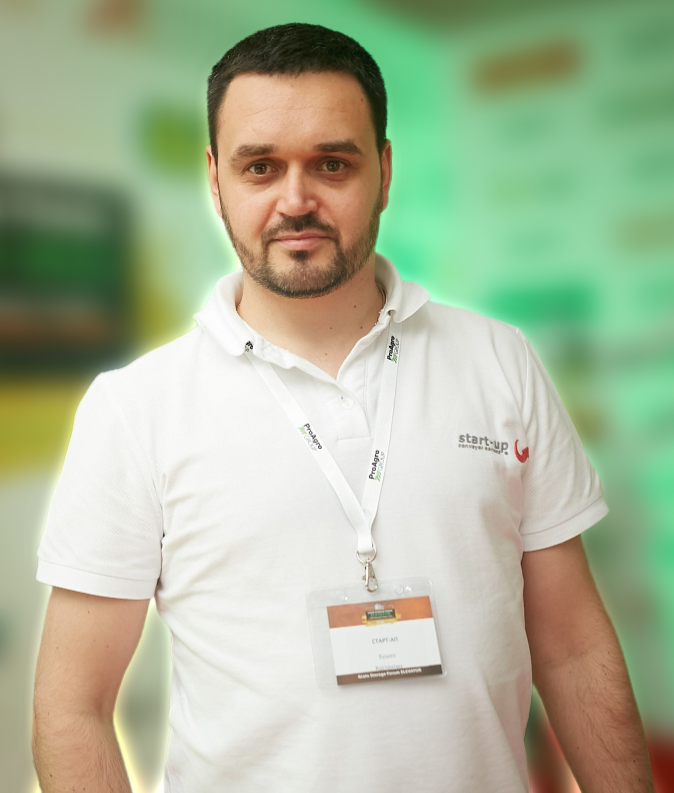
Kostiantyn Bushko
With over 10 years of experience managing engineering projects in the elevator and grain-processing sectors — including design, construction, modernization, technical audits, equipment supply, and capital procurement — I lead technical presales and integrated solutions for elevator facilities at START-UP.
My approach is based on operational reliability, engineering precision, and strategic partnership at every stage of project implementation.