
Intelligent Silo Monitoring — Full Control Over Grain Storage
Grain storage is a complex, dynamic process where temperature, moisture, CO₂ levels, and airflow continuously change, directly affecting both safety and profitability. Without precise monitoring, a silo becomes a “black box,” where hidden processes can lead to overheating, caking, self-ignition, or loss of product quality.
With modern intelligent systems, engineers gain full transparency of internal processes, detect deviations at early stages, and act proactively rather than reactively.
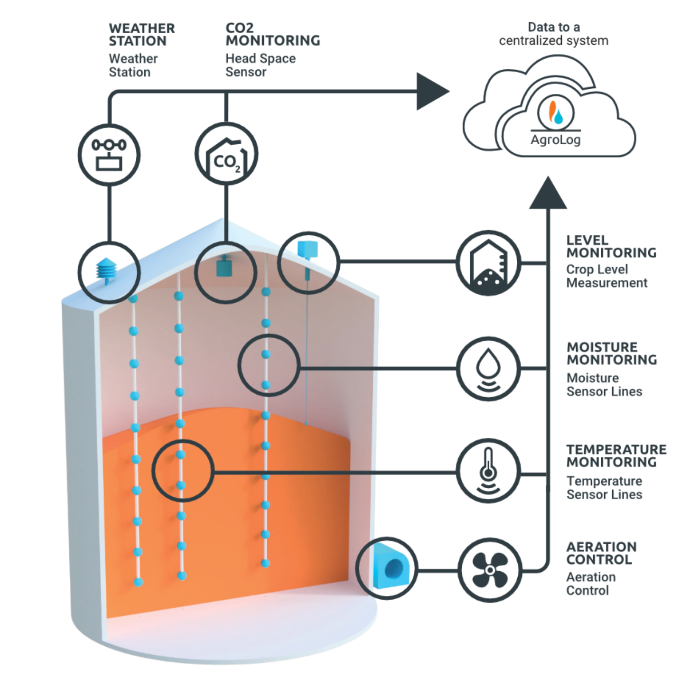
In partnership with AgroLog (Denmark) — one of the global leaders in grain monitoring — we implement high-precision IoT solutions that provide real-time control of temperature, humidity, CO₂, dew point, and aeration performance.
The platform enables centralized control of multiple silos through a single interface, trend analysis, alarm notifications, and automated ventilation management. This significantly reduces risks, improves storage quality, lowers energy consumption, and ensures stable operation — from small farms to large agro-industrial complexes.
Types of Silo Monitoring Systems
Силоси та елеватори
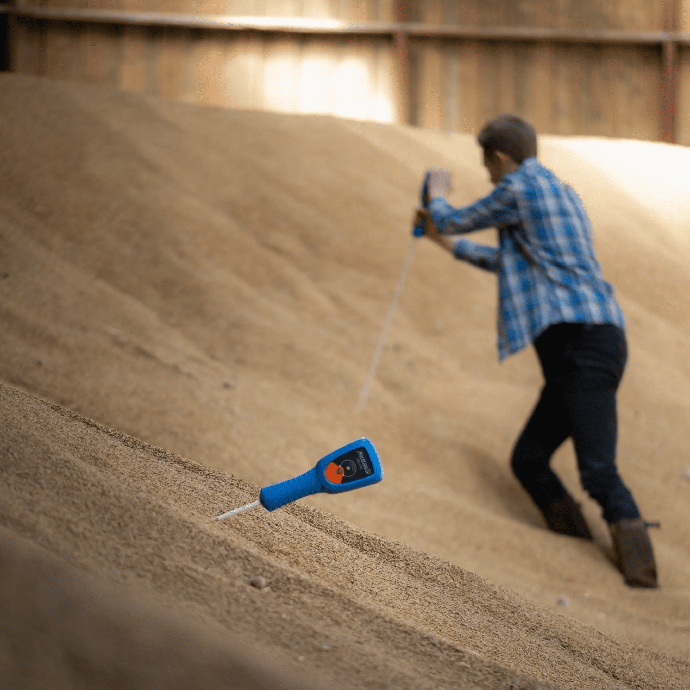
Зерно у складі або ангарі
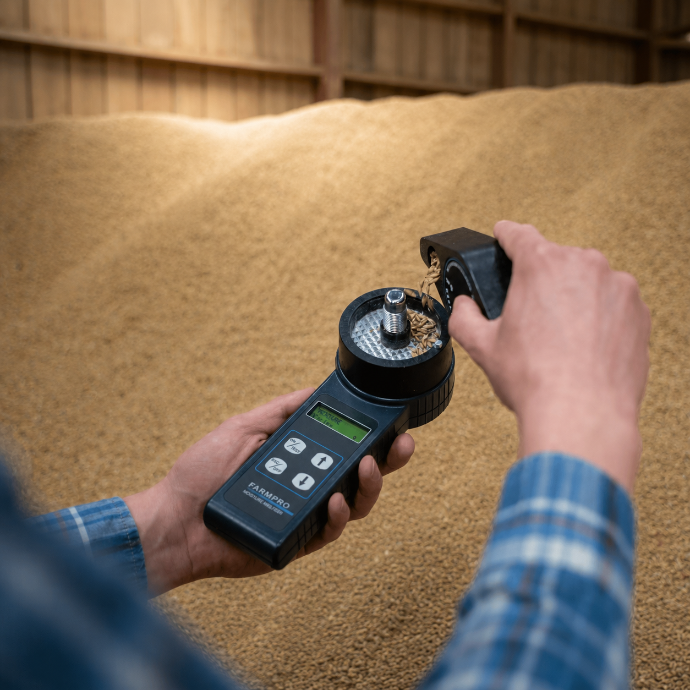
Вологість зерна та насіння
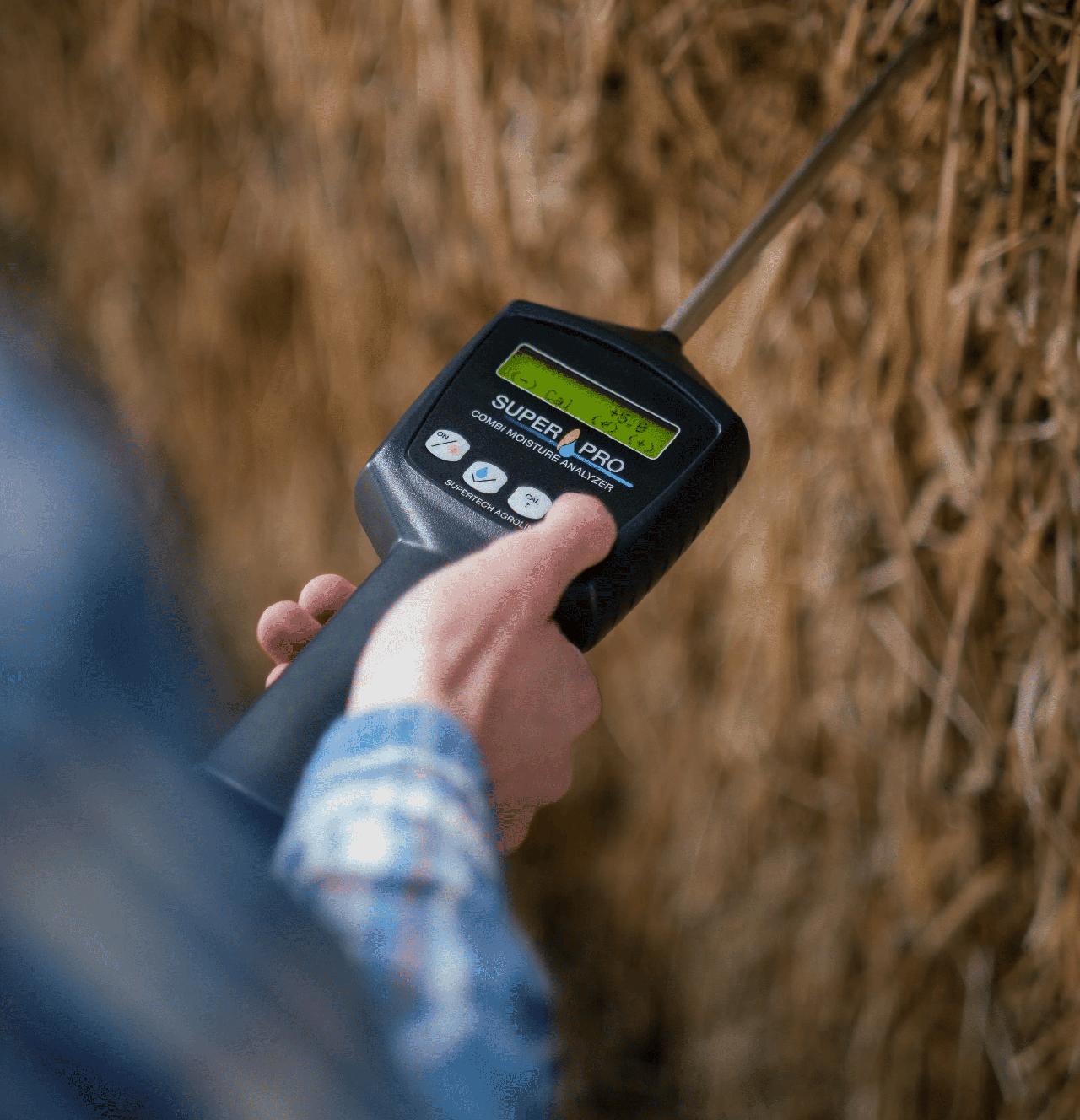
Сіно, солома та силос
Your Problems — Our Solutions
Від поля до зберігання
Збирання
Визначайте фактичну вологість і оптимальний час збору.
Сушіння
Контролюйте зміну вологості та уникайте надмірного сушіння.

Приймання
Перевіряйте якість партії перед закладанням на зберігання.
Зберігання
Контролюйте температуру, вологість та зміни стану продукції.
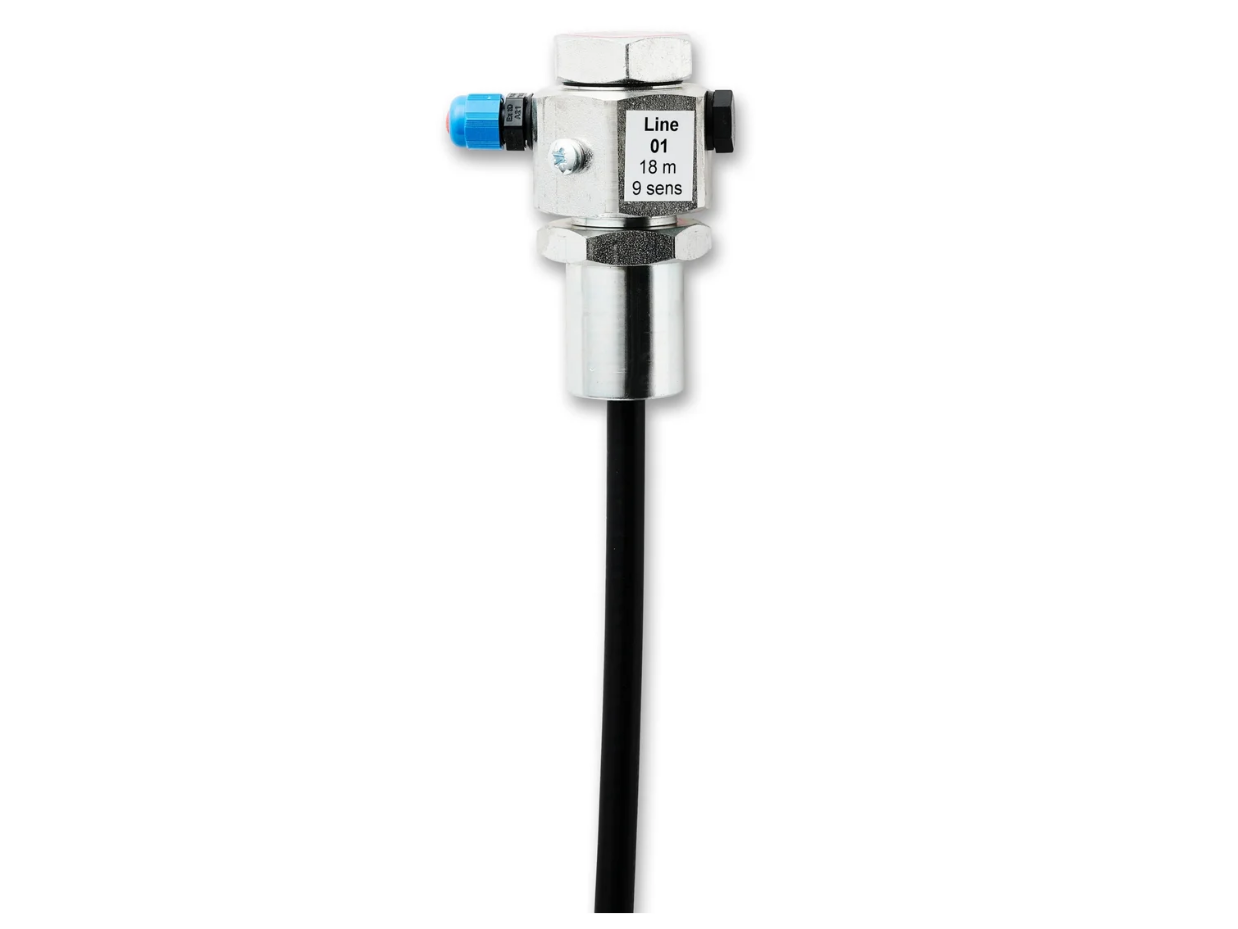
Hardware Components
This section includes hardware components for silo and grain storage monitoring systems supplied by START-UP, including sensors, cables, weather stations, radar level sensors, mounting elements, and communication modules.
These components are part of the complete solution presented on the “Silo Monitoring” page and ensure accurate data collection on temperature, humidity, CO₂ levels, and grain volume — enabling real-time control and safe storage management.
FAQ — Intelligent Silo Monitoring Systems
Yes. Multi-point temperature cables detect even minor changes within specific zones of the silo. The system visualizes the development of “hot spots” and sends alerts before conditions become critical—allowing preventive action rather than reacting to visible damage or запах.
No. Installation is possible without unloading the silo (depending on sensor type) and without stopping operations. Cables are installed through the roof, while electronics are mounted externally.
For small farms, installation takes a few hours; for large facilities, typically 1–2 days.
Temperature and CO₂ sensors are factory-calibrated and maintain high accuracy over multiple seasons. The system automatically detects deviations. Routine verification is recommended once every 2–3 years.
Algorithms analyze temperature, humidity, CO₂ levels, and external weather conditions.
If ventilation improves the microclimate → system activates fans automatically
If conditions are unfavorable (e.g., warm or humid air) → activation is blocked to prevent damage and avoid unnecessary energy use
Yes. The platform consolidates dozens of silos and multiple locations into a single dashboard, allowing centralized monitoring, trend analysis, alerts, and individual control of each silo.
The system stores data locally and synchronizes it once the connection is restored. Alerts are transmitted as soon as the server is available again. The system continues operating in the background.
Yes. A mobile app / web interface provides access to real-time data, historical trends, system status, and push notifications.
The system automatically detects faults and identifies the specific sensor. Other sensors continue operating, and the system notifies the need for service. Replacement or repair is quick.
-
TMS2000 — basic temperature monitoring
-
TMS6000 LINK — cost-effective all-in-one solution for smaller farms
-
TMS6000 — full automation with monitoring of temperature, humidity, CO₂, grain level, and aeration control
Yes. In approximately 90% of cases, retrofit installation is possible without structural modifications. Sensors are installed through existing openings, cables are routed along silo walls, and electronics are mounted externally.
Other Products



Contact Our Specialist
Silo Monitoring
Andrii Lymanskyi
I work with solutions for monitoring grain condition in silos and storage facilities — from analyzing storage conditions to implementing monitoring systems and training personnel. At START-UP, I am responsible for technical equipment selection, system configuration, sensor integration, and supporting clients at every stage of the project.
My approach is based on measurement accuracy, early risk detection, and stable elevator operation without product loss. I provide engineering support, operational recommendations, and predictable results for your silo systems.