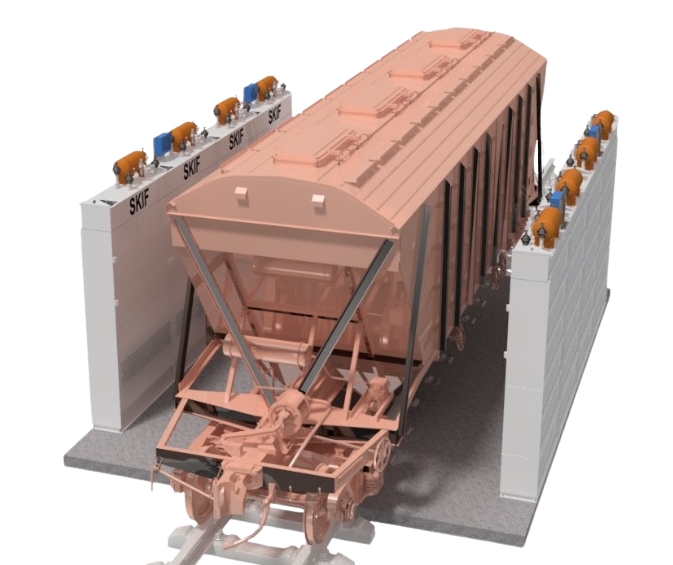
SKIF Aspiration Systems — Clean Air, Stable Production
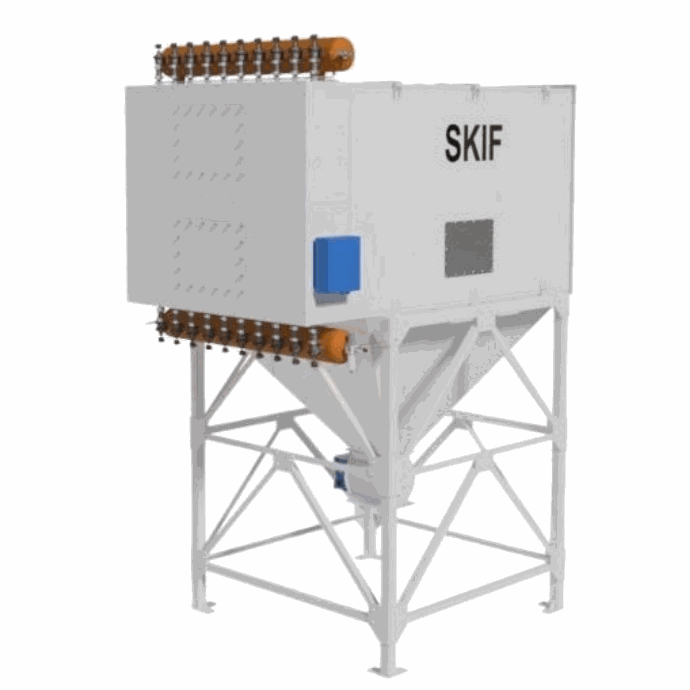
SKIF aspiration systems are high-tech engineering solutions of European standard, designed for industrial dust extraction and bulk material handling. These systems ensure efficient dust removal, stable equipment operation, and optimized energy consumption in continuous production processes.
SKIF solutions are applied across industries with high requirements for safety, environmental performance, and product preservation. Key advantages include precise engineering calculations, adaptation to real process conditions, and the use of European components, ensuring compliance with CE, ATEX directives, and EN ISO 13849 standards.
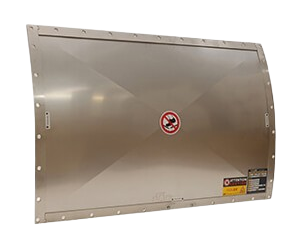
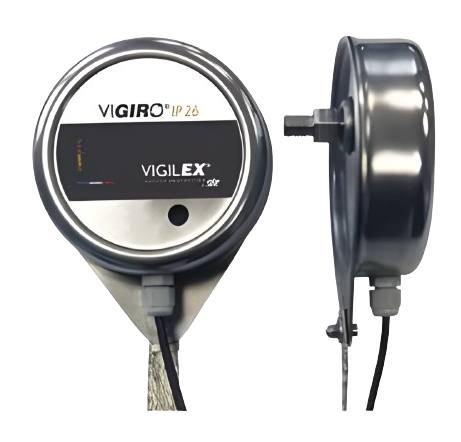
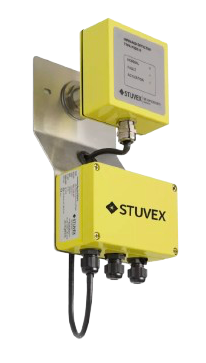
SKIF aspiration systems are engineered for operation in explosive environments, where dust concentration can exceed permissible levels multiple times and explosion development occurs within milliseconds. To enhance safety, the equipment can be equipped with integrated explosion protection and monitoring solutions from STIF (France), including explosion vent panels, backflow valves, spark detection systems, and pressure monitoring.
This approach enables early detection of ignition sources, localization of explosions at the initial stage, and full compliance with current European safety regulations—without the need for additional structural modifications.
Your Problems — Our Solutions
Aspiration is not just dust removal, but a complete technological process that determines the safety, efficiency and quality of production.
Filtration System Range
Uni-f ™
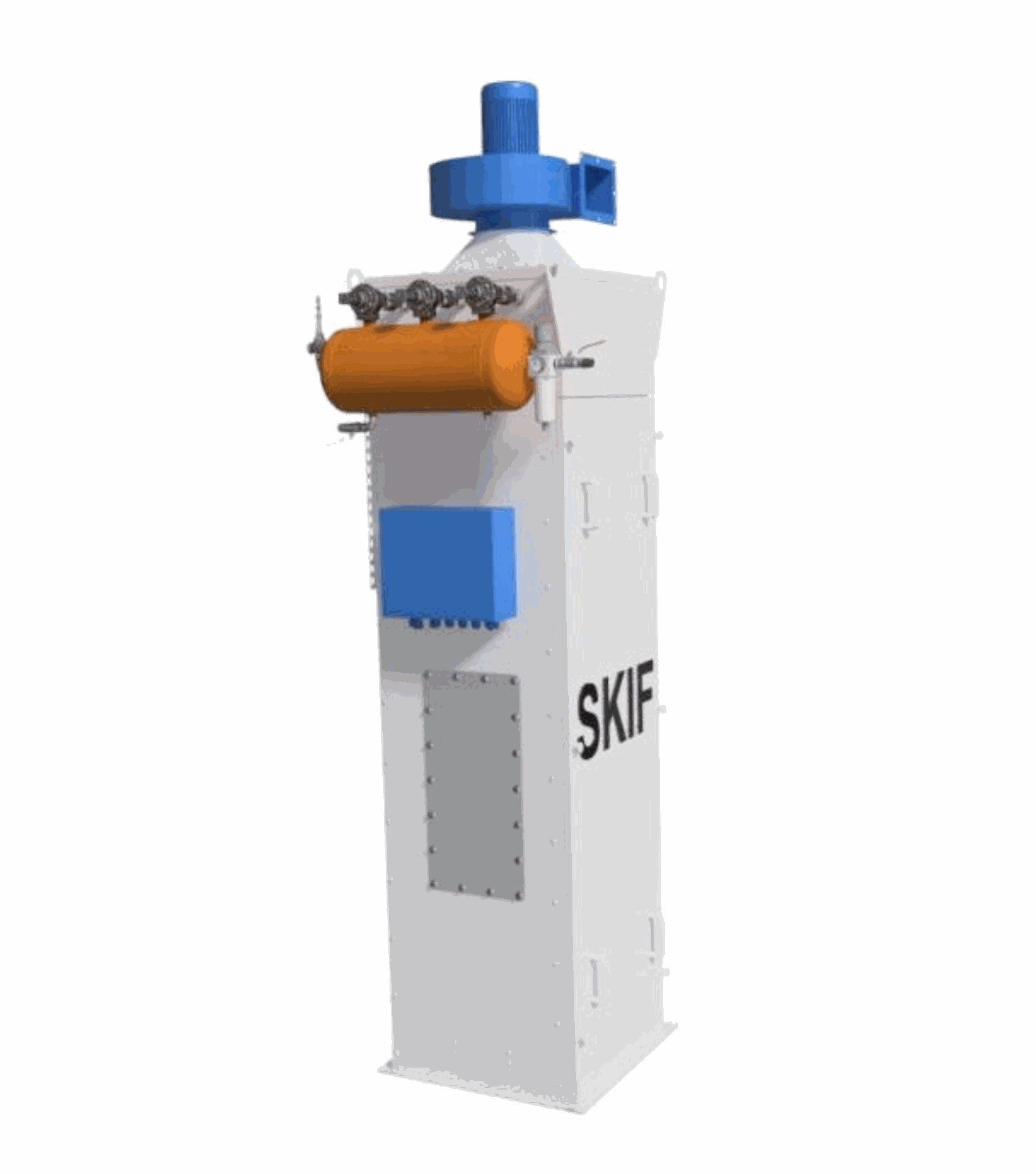
Unload-f ™
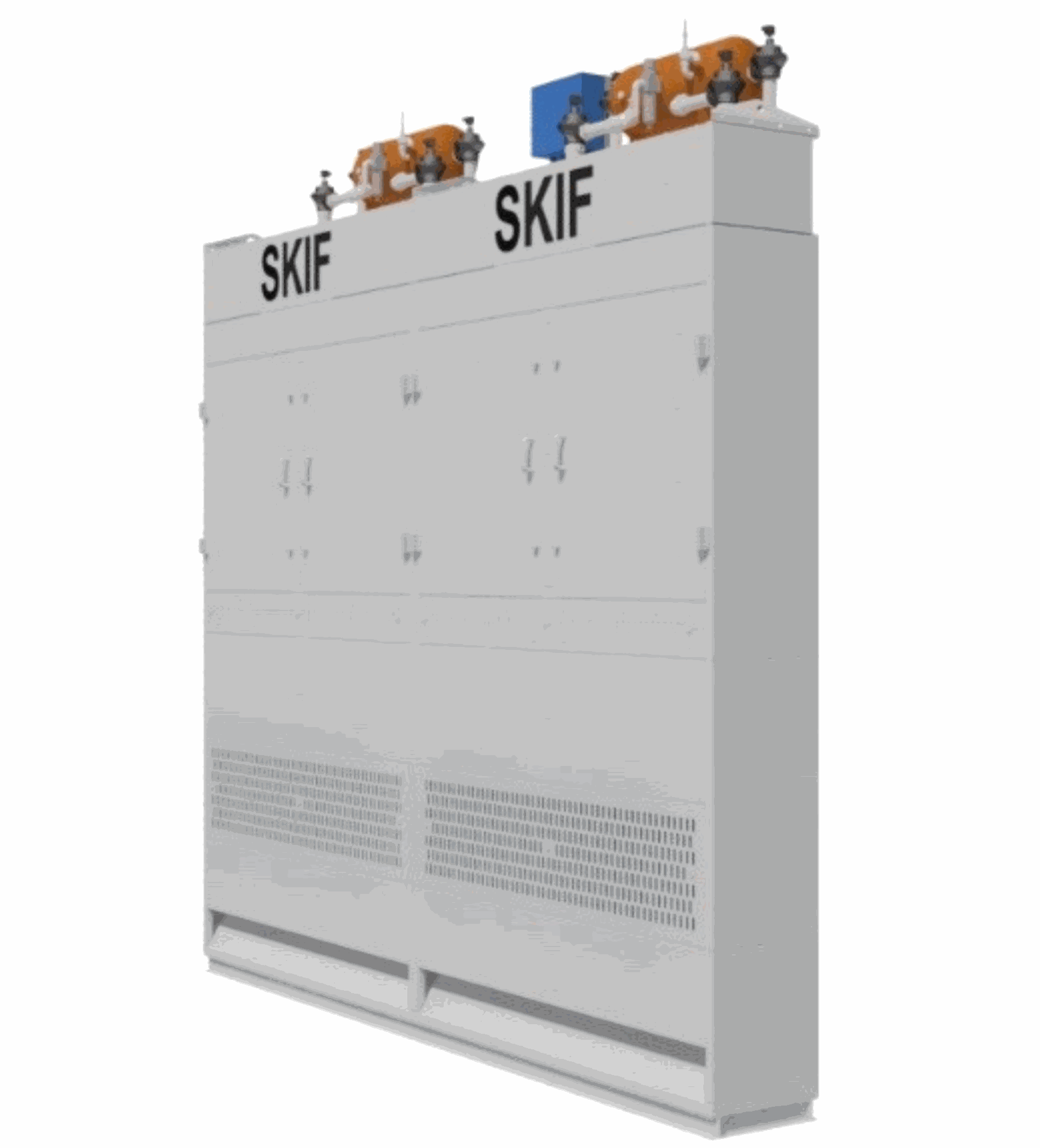
Cyclo-f ™
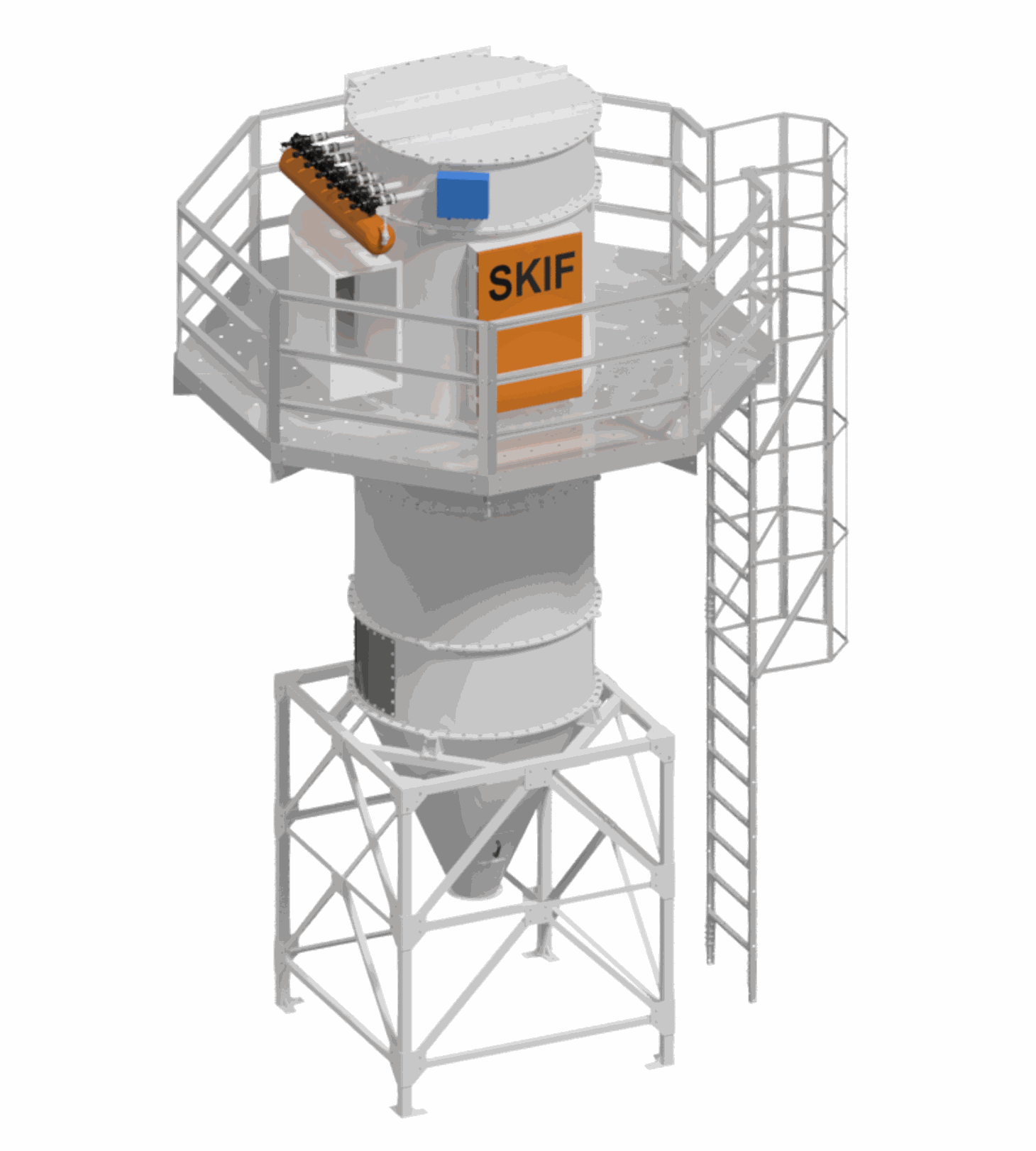
Cas-f ™
Turnkey Project Implementation Format
Engineering
Supply

Installation

Commissioning and Handover
FAQ — Questions Clients Frequently Ask
We evaluate the actual dust concentration, ΔP stability, filter condition, and fan performance.
If dust appears in conveying zones, ducts clog frequently, or ΔP fluctuates significantly, the system no longer meets standards and requires modernization.
In such cases, we recommend a dust-generation audit.
This depends on the product type, line capacity, and dust load.
SKIF designs solutions based on:
-
Uni-F — for most elevator and conveying points
-
Cas-F — for fine and problematic dust < 5 μm
-
Unload-F — for loading/unloading zones
-
Cyclo-F — for pre-separation on large flows
-
High-efficiency fans
-
STIF explosion protection
After analyzing your process, we select the optimal system with an airflow capacity from 500 to 72,000 m³/h.
For a correct aerodynamic design, we require:
-
line capacity (t/h or m³/h);
-
material type (grain, flour, feed, shavings, etc.);
-
layout of process units (elevators, conveyors, separators);
-
duct lengths and heights;
-
information on existing filters;
-
ATEX zoning data.
Based on this information, we calculate airflow, ΔP, and select the appropriate filter type.
Service life depends on dust type and ΔP stability.
In SKIF systems, thanks to pulse-jet regeneration and high-quality filter media, the element lifetime is up to 2× longer than in standard solutions.
Recommended checks:
-
ΔP check — once per week
-
scheduled maintenance — once per quarter
Yes. In most cases, full replacement is not necessary.
Effective modernization options include:
-
adding Cyclo-F units before existing filters;
-
replacing old filters with modern Uni-F / Cas-F systems;
-
upgrading to a high-efficiency fan;
-
optimizing ductwork and stabilizing ΔP.
In around 60% of cases, modernization provides the same effect as a new system but at a significantly lower cost.
Key performance indicators:
-
up to –30% energy savings due to proper aerodynamics;
-
reduced product losses (dust returned to the product flow);
-
extended filter lifetime;
-
less downtime from clogging and overloads;
-
ATEX compliance → avoidance of fines and production shutdowns.
On request, we provide a preliminary ROI calculation.
It depends on line capacity, material type, and current equipment condition.
Typical payback period: 8–24 months due to reduced energy consumption, lower product losses, and fewer stoppages.
Selection depends on:
-
dust type;
-
particle size;
-
temperature;
-
ATEX requirements;
-
required airflow.
Typical applications:
-
Uni-F — grain, compound feed, conveying points
-
Cas-F — fine, explosive dust
-
Unload-F — high-precision local aspiration
-
Cyclo-F — pre-separation on large flows and filter protection
Other products


Contact Our Specialist
Aspiration & Explosion Safety
Artem Morozov
Since 2017, I have been working with solutions for agro-industrial, feed-mill, and milling facilities — from dust-generation audits to the implementation of aspiration and explosion-protection systems.
At START-UP, I am responsible for equipment selection, system design, STIF technologies, and full project support.
My approach is based on ATEX, CE, and ISO compliance, engineering precision, and predictable system performance.